
Ceiling water damage repair in Conroe, TX
The color, edge, and spread of a ceiling stain tell you more about the source than a guess ever will.
Call For Help(936) 274-144624/7 emergency line. Free estimates from local pros.
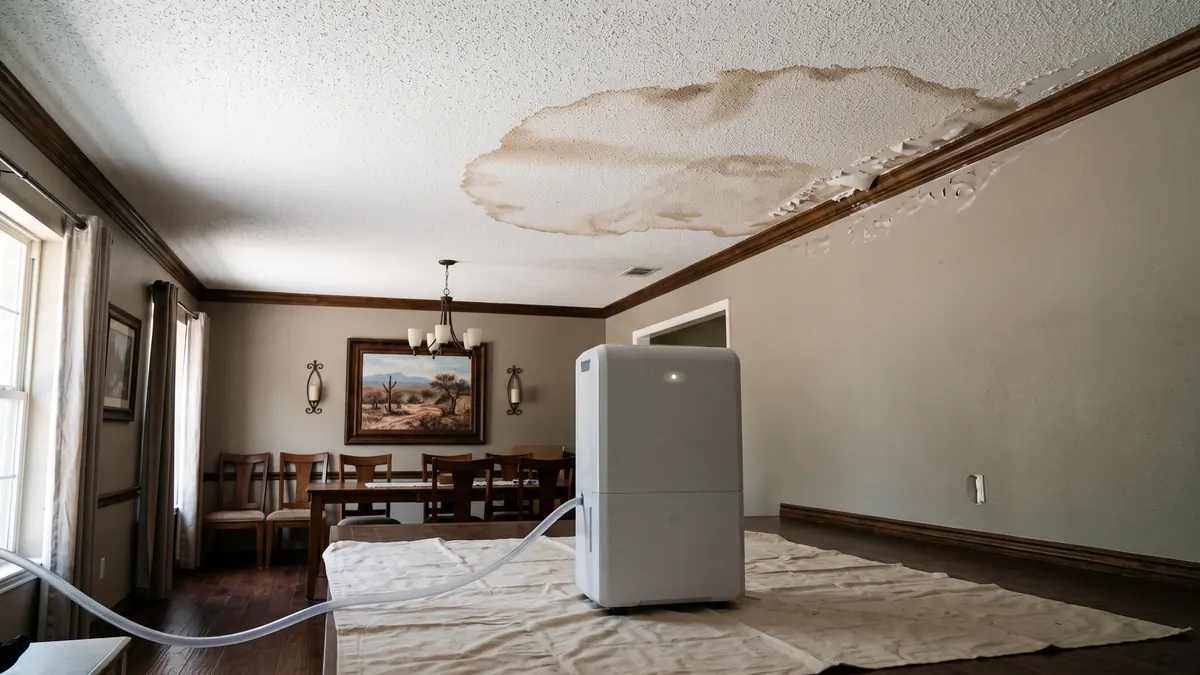
A stain on your ceiling is water that already reached you, not water that’s about to. The color, the edge, and how far it’s spread tell you more about where it came from than a guess ever will.
Start with the stain’s color
A brown or yellowish ring usually means water dried there before, at least once. Fresh water tends to look darker, sometimes almost gray, and the ceiling around it can feel cool or damp to the touch. If a dark spot is actively spreading while you’re looking at it, water is moving through right now, not sitting there as a leftover from weeks ago.
A sagging or bulging section is a different problem than a flat stain. Water pooling above the drywall weighs more than it looks like it should, and drywall can hold a surprising amount before it gives way. Stay out from under it. If the flow feels active, cutting power to that area and getting help fast matters more than watching to see what happens next; the emergency water removal page explains what that first response actually involves.
Where the stain sits narrows the source
A stain lined up with the attic AC air handler almost always traces back to condensate that missed its drain, especially during the long-running summer months. The AC condensate overflow guide breaks down where that condensate run gets blocked and why the backup pan exists. A stain that appears along an outside wall right after a storm makes the roof the lead suspect instead. One that sits under an upstairs bathroom is more likely a supply line or a shower pan leaking than anything coming from above.
The coverage question nobody explains
Insurers generally read a ceiling stain one of two ways. A stain that shows up all at once, tied to a single clear event like a burst line or a storm, tends to get treated as an accidental loss, the type most standard policies are meant to cover. A stain that grew slowly over weeks, with nobody noticing until the paint darkened, gets more scrutiny, closer to a maintenance issue in an insurer’s eyes. Which bucket yours falls into depends on your own policy and how well you can document the timeline, so treat this as the general shape of the answer, not a promise.
Opened up or dried in place
A ceiling that stayed damp only a short while can sometimes dry in place with the right equipment, no cutting needed. One that’s been wet longer, or where the drywall has already started to sag or lose strength, usually needs a section removed so the space above can dry and get inspected properly. The water damage repair guide breaks down how that repair-or-replace decision typically gets made, on a ceiling or anywhere else in the house.
Read the stain before you paint it
Paint hides a stain, but it doesn’t answer whether the water behind it is finished or still moving. Call us and get that answered first. Is your ceiling still wet, or is it already yesterday’s problem?
Common questions
Can I just repaint over a ceiling stain instead of fixing anything?
Only once you know the water behind it has actually stopped and dried out. Paint hides discoloration, but it won't stop new mold or a return leak from working under the surface. Confirm the source is fixed and the area's dry before you reach for a roller.
Could a stained ceiling actually cave in?
A sagging or bulging section can, if enough water pools above the drywall before anyone deals with it. A flat, dry stain that's already been fixed at the source carries much lower risk. Treat any sag or bulge as a reason to stay clear and call, not paint over it.
Is ceiling water damage a job for a roofer, a plumber, or an HVAC tech?
It depends on the source. A roof leak needs a roofer, an AC condensate issue needs an HVAC technician, and a supply or drain line needs a plumber. Whichever one fixes the cause, drying out the ceiling and insulation is a separate job from fixing what caused it.
Related pages
Appliance Leak Cleanup
The tank is a plumber's job. The floor underneath it is a different problem entirely.
Learn more →Burst Pipe Cleanup
A burst pipe is loud, fast, and the kind of loss most Texas policies are actually built to pay for.
Learn more →Commercial Water Damage
A flooded stockroom isn't a flooded living room. Inventory, leases, and a reopening date all ride on it.
Learn more →Emergency Water Removal
Standing water gets worse by the hour. Here's what removal actually involves, and why a shop-vac isn't built for the job.
Learn more →Talk to a local pro now
We answer 24/7. One call gets a Conroe crew moving on your water damage, with a free estimate and help with your insurance claim.
Call For Help(936) 274-1446Free estimates. No obligation to hire.